Healthy Monday - Week 2:
DeStress with Calming Visualizations
You deserve some time to unwind. This Monday, make it a priority to set aside a few moments for meditation and visualization to help improve focus and reduce stress. After you’ve taken these moments for yourself with the guided video featuring some of your colleagues with Columbia University Irving Medical Center’s Ian J. Sadler, Ph.D., reinforce your knowledge and share your feedback by clicking the survey link below. We’d love to hear from you.
Watch part two: Visualization.
Looking for a successful tactic to keep calm when life gets stressful? Stress can take a toll on your physical and mental wellbeing, disrupting the immune, digestive, cardiovascular, sleep, and reproductive systems. But stress affects us all differently; some people may experience digestive symptoms or anxiety, while others may experience headaches, sleeplessness, or irritability.
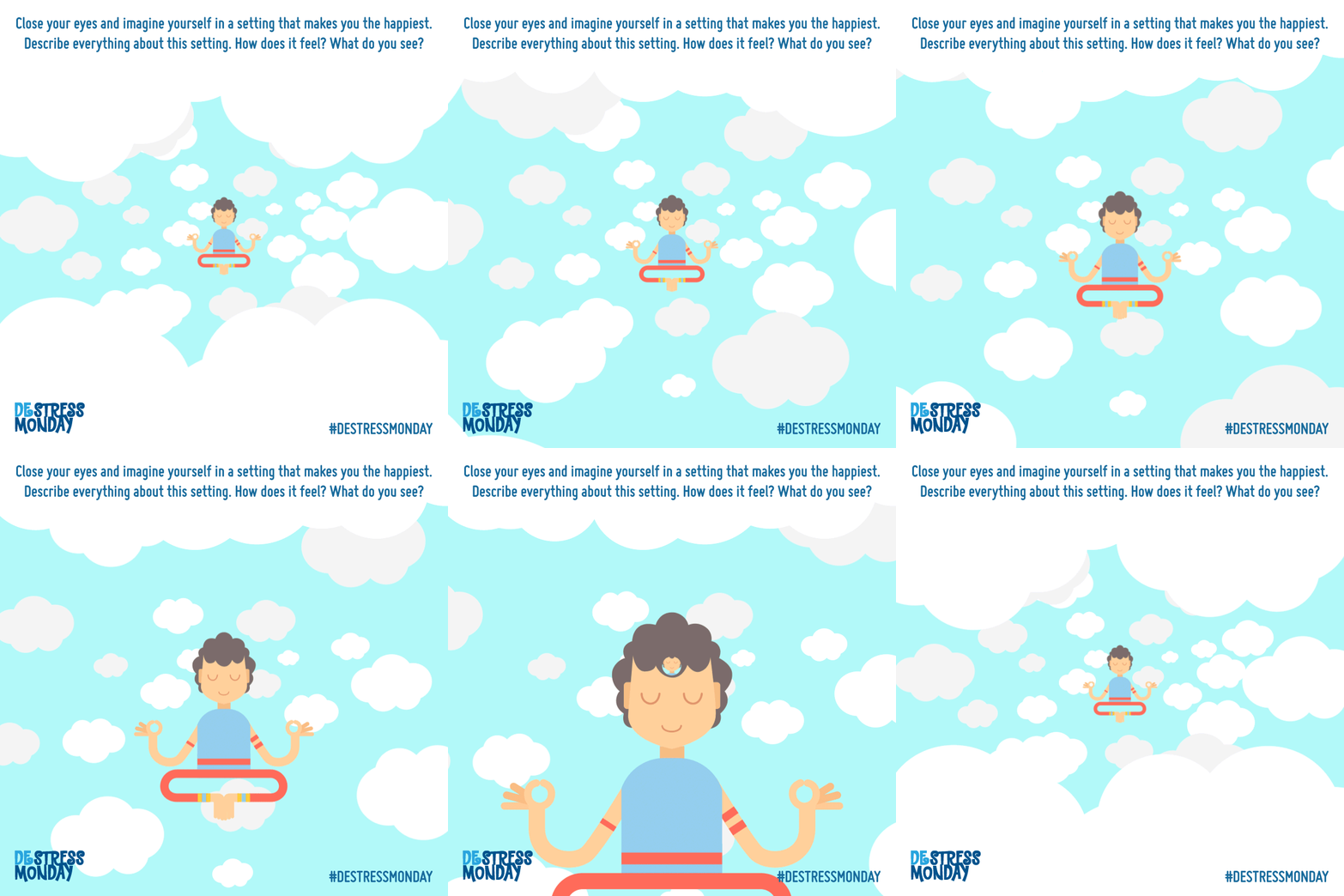
This Monday, take a moment to refocus using the power of visualization for stress relief. Visualization is a simple technique that you can adapt to fit your particular needs, and research shows that positive imagery can help the body relax by slowing down breathing and lowering blood pressure. The fundamentals of visualization for stress relief are as follows:
First, you’ll want to set the mood. Find a quiet place, close your eyes, and take some deep breaths. Try visualizing a pleasant feeling, memory, or an imagined place or experience. Maybe it’s spending time with your family, being on vacation, putting a child to bed, or taking the dog for a walk. Use all your senses to recreate how you felt at that moment to try to make it as real as possible in your mind. Take a deep breath while you’re feeling calm and open your eyes. Carry over the stillness of your calm self into the now. End with some more slow, deep breaths.
After capturing this feeling of calm, you’re ready to apply it to your stress overloads. When you’re in the throes of a stressful episode, recall your visualization practice and bask in the pleasant memory.
The Science:
Mindfulness practices have existed in one form or another for centuries, and today they’ve been adapted by spiritual leaders, healthcare professionals, and psychologists to address the stressors of modern life. Scientists studying visualization methods associated with mindfulness explain that to be calmer, remember ‘calm’ first. Positive imagery may also help the body relax by slowing down breathing and lowering blood pressure.
Share Your Feedback
Please answer a few quick questions (1 minute) to let us know if you're setting your intention and learning something new. Have a Healthy Monday!
What else is your hospital doing for Healthy Monday?
For staff at Columbia University Irving Medical Center: To get more resources to support this week’s practice, visit Columbia Work/Life.
For staff at NewYork-Presbyterian: Get more resources to support this week’s practice, visit NYPBeHealthy.